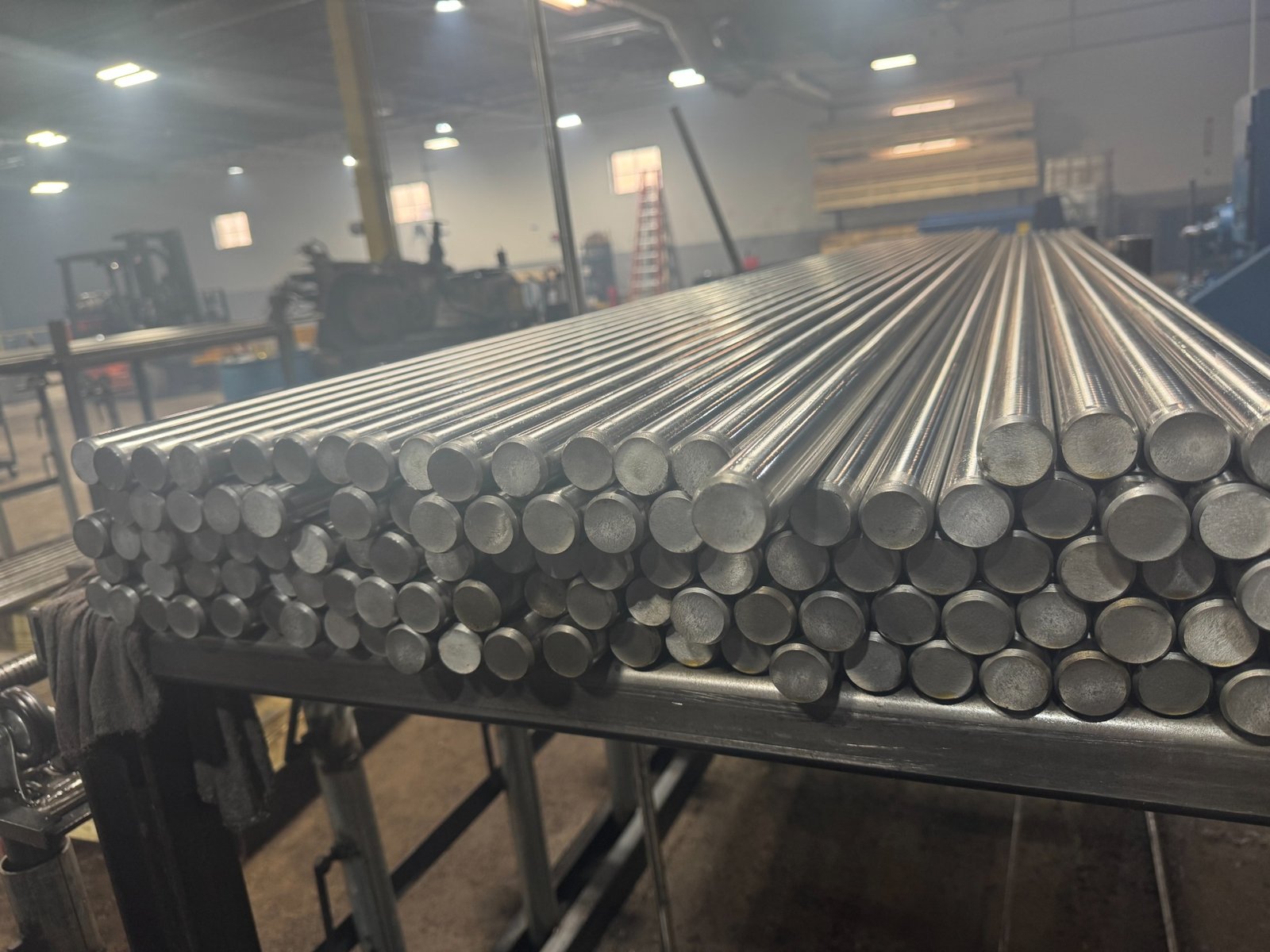


A request for 316 stainless pump shaft quality (PSQ) bar is more specific than a request for 316 stainless round stock. It normally implies a shaft application with demanding diameter, surface and straightness needs. However, “PSQ” is not a single universal inspection limit. The buyer and supplier must agree on the actual drawing and purchase order requirements.
If you’re purchasing material for a pump or fluid-handling shaft, request precision ground 316 bar pricing with the finished OD, length, quantity and acceptance method.
Start with the correct material and condition
Identify whether your drawing calls for Type 316 (UNS S31600), Type 316L (UNS S31603), or another approved stainless steel. Those are different material designations; low-carbon 316L should not be substituted automatically when a controlled purchase order specifies 316. Include the required chemistry, mechanical condition, and any industry or customer specification.
For bar product, ASTM A276/A276M is one specification covering stainless steel bars and shapes. Whether it is the right standard depends on the part and the actual engineering requirements. State the edition required by the drawing or customer instead of assuming a standard from the alloy name alone.
For base grade information, review 316 stainless ground rods and 316L ground rods.
What does “pump shaft quality” need to mean on your quote?
| Requirement | Useful RFQ wording |
|---|---|
| Material | 316 or 316L, UNS designation and governing standard |
| Nominal and finished OD | Example: 1.0000 inch nominal, specify allowed upper and lower diameter limits |
| Roundness | Numerical geometric limit and agreed inspection method if required |
| Straightness | Numerical limit over a defined span with support and indicator method |
| Finish | Specified Ra or other approved roughness parameter with units |
| Cut length | Nominal length, length tolerance and end preparation |
| Certificates | Heat number, material test report and additional inspection documentation as specified |
| Quantity | Pieces, pounds and delivery-release schedule |
Merely placing “PSQ” on a purchase order does not tell the supplier whether a 12-foot length and a two-foot shaft blank will have the same straightness acceptance. Set geometry and measurement criteria for the actual delivered form.
Diameter tolerance versus shaft runout
A shaft can satisfy its OD limits and still have unacceptable bow or indicator variation. Diameter, roundness, straightness and runout are different characteristics. If a drawing calls for total runout relative to specific datums, preserve that callout; do not replace it with a generic “straight within 0.006 per foot” instruction.
To avoid receiving disputes, specify the datum features if applicable, inspection span, supports and where the indicator readings will be taken. Our ground bar straightness and TIR guide explains why two apparently similar readings can disagree.
Ground or turned-ground-polished for a pump shaft?
Both processes can be relevant to finished shafting, depending on starting bar, application and required finish. A centerless-ground surface can supply a controlled OD; a subsequent polishing step may be evaluated for particular roughness or visual surface requirements. The buyer must specify the actual allowed roughness and surface defects rather than assuming a process name is a complete specification.
For example, “16 Ra” should state microinches or micrometers, the parameter, and any inspection conditions. The wrong units can change the meaning dramatically. See centerless grinding and metal bar polishing for processing options.
How to write a complete 316 PSQ bar RFQ
Example, not a guaranteed available configuration: “Quote Type 316 stainless round bar to the specified material standard, precision ground for pump shaft use. Nominal finished OD 1.0000 inch, permissible limits per attached drawing. Nominal 144-inch lengths, 75 bars. Quote separately the achievable straightness over our specified support span, surface roughness, end preparation, material certificate, protective packaging and estimated delivery. No grade substitution without written authorization.”
For short pump-shaft blanks, provide the cut schedule and machining allowance. If the final shaft will have bearing journals, seal surfaces, keyways or threaded ends, clearly distinguish the bar stock’s delivered limits from features that will be machined afterward.
Common questions when sourcing 316 PSQ
Does 316 stainless have one standard PSQ tolerance?
No universal PSQ tolerance should be inferred from the product description alone. Purchasing specifications, customer requirements and supplier capabilities must define what “shaft quality” means on the order.
Should I buy 316 or 316L for a pump shaft?
Follow the approved material selection and service requirements. The low-carbon grade may be specified for certain fabrication or corrosion considerations, but it is not a blanket substitute for every 316 application.
Is grinding enough for final shaft finish?
That depends on the mating surfaces, finish and drawing. In some cases further machining or polishing is specified; in others, precision-ground feedstock will be machined into the final component.
Can you quote stock I already own?
Identify it as customer-owned 316 and provide the incoming diameter, condition, straightness and final requirements. See the customer-supplied bar grinding checklist.
Ready to buy 316 shaft bar? Send your 316 or 316L specification, finished OD limits, length and quantity for quotation review.